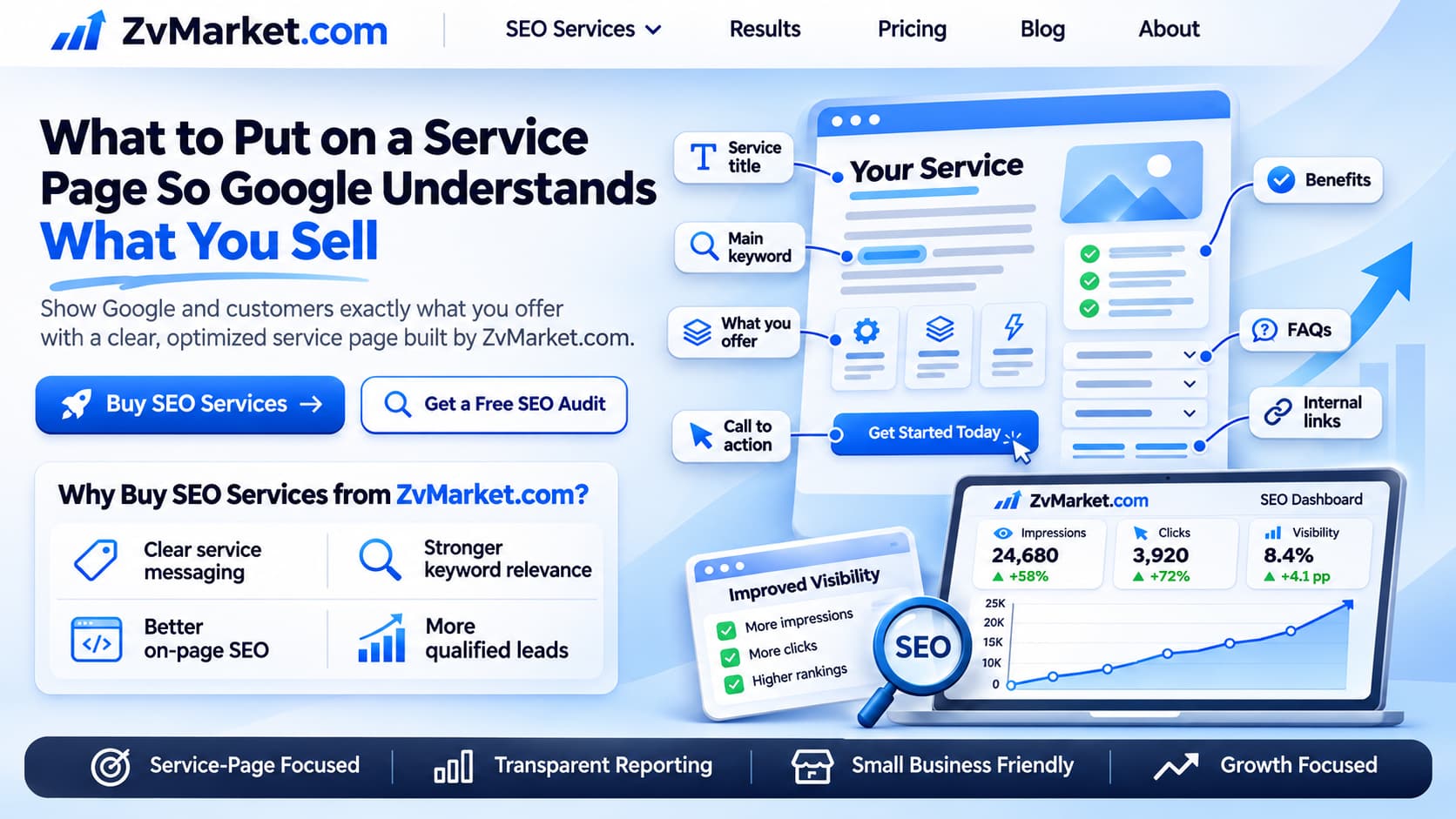
What to Put on a Service Page So Google Understands What You Sell
-
November 27, 2026
Service page SEO starts by making the offer easy to understand. A person arriving from Google should be able to tell what you sell, whom it helps, and what they can do next. Search engines can also use a clear heading, descriptive text, and links from related pages to understand what the URL covers. Build the page around one recognizable offer and the questions people ask before paying for it.
Treat the page like a written version of a productive sales conversation. Start with the useful information a visitor needs to decide whether to continue. Then explain the scope, evidence, costs or pricing drivers, and what happens after someone contacts you. The sections below give you a way to decide what belongs on the page, even if your business cannot quote the same price for everyone.
Write a first screen that names the offer
Use the main heading to name the work in the words a customer recognizes. “Emergency commercial refrigeration repair” is more specific than “solutions for a changing world.” Add a sentence describing the situations you handle and where you work if location matters. Keep the next step visible and meaningful. A form labeled “Request a refrigeration repair quote” sets clearer expectations than an unexplained button with the word “Submit.”
Read the first paragraph without seeing your logo or navigation. A new visitor should still be able to say what the service is. If the page serves a specific audience, name that audience early. If response times vary, describe when you are available and how requests are handled. You can also include a short qualification, such as the type of equipment you service, so readers can quickly decide if the offer fits.
Match the page to a task, then choose the right detail
Search a few phrases customers use to describe the offer. Look at whether the results favor service pages, directories, comparison guides, or instructional articles. People searching for a company that can repair equipment are likely to want contact options and proof of experience. People asking how to diagnose a fault need instructions. Give a truly separate question its own guide if you can answer it well, and link from the service page where appropriate.
Use an outline that matches what buyers need to know. Include problems you handle, work included, exclusions, a short process, examples, pricing information, and a next action. Arrange those sections so each one answers a different question. The Ahrefs on-page SEO guide explains how titles, headings, and helpful links contribute to a clear page. Google’s SEO Starter Guide provides a useful reference on site structure and search presentation.
Add a real example and explain why it matters
A short, documented example can show how the work happens. A repair company might describe a cabinet that stopped holding temperature, the tests it used, and the work it completed. Explain which details apply to similar jobs and where results can vary. A consulting business could show a redacted sample report and call out a decision the reader would be able to make with it. Avoid publishing client names or data unless you have permission.
Use images when they support the explanation. A service photo can show a part, the scale of an installation, or a completed job. Add concise alt text that describes the visible subject when the image conveys information. Where credentials matter, name the actual credential and who holds it. The goal is to give the visitor enough evidence to compare your offer with alternatives and decide whether to get in touch.
Explain prices, boundaries, and the next step
You can help customers budget without committing to a fixed price for every project. List the major pricing factors and clarify whether an inspection, callout, or quote has a charge. Explain what is included and what can change the scope. A line about expected lead times is useful if it reflects your real scheduling. A reader who understands the process is more likely to send the details you need to respond efficiently.
Check your form or link on a phone. Ask for the information needed to start a conversation, such as the equipment model, location, and a description of the issue. State how and when you normally reply. If phone calls are important, make sure the number is easy to find and works when tapped. Review the page as a customer who needs an answer today and has limited time to read.
Connect service page SEO to the rest of the site
Link from your services hub and from one or two related guides. Use clear anchor text that describes the offer. Give the page a short title that names the service and a meta description that explains what makes the page useful. Keep the page’s heading, displayed information, and title consistent. Place supporting questions near the relevant sections rather than adding a long list that repeats what is already on the page.
Keep an inventory of core pages and what each one covers. If two URLs advertise the same work and target the same audience, check which version is better maintained and whether both still need to exist. Review Search Console after publication to see whether the page is appearing for useful queries. Track quote starts or another meaningful action separately so you can see whether visibility is bringing the right people.
Make a short list of the questions a potential customer still needs to ask before booking. If those questions are about basic eligibility, pricing, or availability, consider answering them on the page. Save questions about unusual jobs for the initial call, where you can ask for context.
When a clear service page is ready for promotion
If the page already explains your offer and includes real proof, ZvMarket’s First Page Formula package can help with manual link building around it. Buying the service can free your team to handle customer inquiries and improve the offer while someone else works on relevant placements. Give the campaign a priority URL and describe the audience that would benefit from finding it. Confirm the scope and reporting before buying so you can evaluate the work against the visibility and inquiries you want to improve.
You May Also Like

-
Nov 27, 2026
Real estate neighborhood guides can stay useful for years because the questions they answer survive an individual sale. A property...

-
Nov 27, 2026
Practice area pages should help a person decide whether they have found the right team to talk to. A visitor...
-
Nov 27, 2026
Getting stuck on page two of Google can be frustrating, especially when a page already earns some visibility. It already...
Sign up to receive our latest updates
Get in touch
Address
108 Imperial Ave, Winnipeg, MB R2M 0K7, Canada
Wolf@zvmarket.com
