
How to Track Which Law Firm Pages Generate Consultation Requests
-
November 27, 2026
To track law firm consultations by page, start by distinguishing a request from the actions that precede it. A click on a telephone link can show intent. A successful inquiry form can show that someone contacted the firm. A qualified request or a scheduled consultation usually needs confirmation from intake staff. These steps belong in the same reporting plan, but each answers a different question about where marketing or intake needs attention.
Choose a reporting goal and define it with the people handling inquiries. A firm might count completed requests, qualified matters within its scope, and confirmed consultations. Decide who can see marketing reports and which information should stay within intake systems. In legal services, a clear privacy policy and approved analytics setup matter more than collecting every possible detail about a visitor.
Map the paths people use to contact the firm
List the main calls to action on the site. Identify click-to-call links, contact forms, embedded scheduling tools, and any external booking service. Note the pages with each action and how you can tell whether it succeeded. A form submission can trigger a thank-you message, and a scheduled meeting may appear in an approved system. A page view does not establish that someone completed a booking.
Check the routes in a signed-out browser and on a phone. Submit a clearly labeled test inquiry through the proper test process and check that intake receives it. Test what happens when a required field is missing. If both successful and rejected messages trigger the same event, a report could count attempts as inquiries. Find an observable success event and document the test date.
Keep source, first page, and submission page distinct
The first page of a visit can be an educational guide, while the request may happen later on a practice page or a contact page. Both pages have a role. Use landing page information to see what attracted the visitor and the event page to see where the contact action happened. A single total spread across many pages cannot tell you which part of the path needs work.
Define the attribution view in plain language before sharing a chart. For example, you might report sessions that began on a law firm practice page and later produced a successful request during the visit. A person can return on another device or call a number they saved earlier, and those paths may not be attributed completely. Avoid presenting marketing attribution as a perfect history of what caused any individual to contact the firm.
Use privacy-conscious event names and fields
Choose clear event labels, such as consultation request submitted and click to call. Work through a supported, approved configuration and review the values collected. Do not transmit matter descriptions, names, email addresses, phone numbers, or form contents to a general analytics platform. Review page URLs as well because search parameters can accidentally contain information from a form or a scheduling system.
Keep the marketing report at the right level of detail. An approved intake tool could record internal routing and qualification without sharing the substance of a matter with marketing. For analysis, counts by page, office, and practice are often enough. Test that reports do not expose details through event parameters, URLs, or exported dashboards. Ask the firm’s appropriate privacy and technical reviewers to approve the setup before using it broadly.
Compare search visibility with actual inquiries
Use Google’s guide to using Search Console and Analytics together to understand the distinction between a click in search and a session or event on the site. Ahrefs guide to Search Console explains how to examine pages and queries in the Performance report. Search Console can show which topics generate impressions and clicks, while your approved measurement setup can show whether people who arrive on those pages move toward an inquiry. The two systems can count and group activity differently.
A practice page might receive a lot of relevant impressions but few clicks. Review its title, search position, and the result layout. A page might receive visits and many form starts, but few successful requests. In that case, test the form and its expectations instead of changing its headline. If a page produces requests that intake cannot use, review the service boundaries, office information, and language in the first screen.
Build a short report that the intake team can use
Use one row per priority page and period. Include search clicks, landing visits where available, successful contact actions, and a qualified count from an approved workflow. Mark information you cannot measure rather than filling blanks with guesses. For pages that receive very few requests, compare several weeks and treat individual swings carefully. Include a change log so the team knows when a new form or heading went live.
Ask intake to identify recurring patterns without exposing individual details. For example, several inquiries may come from outside the geographic area the firm serves because its practice page never names the service boundary. Add that fact near the opening and check whether the next period is better. If a contact route fails, fix the route and test it before investing in more traffic.
Here is a simple example. In one month, a practice page attracts forty landing visits, eight clicks on the call link, and two completed forms. Intake confirms three suitable inquiries from that page where attribution is available. The numbers describe different stages and may overlap. Put them in separate columns and note which comparisons are only directional. If call clicks remain steady while suitable inquiries fall, listen to aggregate feedback from intake and examine the page’s offer before changing the event definition.
When to buy an SEO review focused on consultations
Consider ZvMarket’s Lawyer SEO Services when the firm needs help deciding which practice pages and local results should drive more qualified requests. Buying support can bring the page audit, content priorities, and local visibility work together around a measurable objective. Bring your approved definitions and a report with aggregated figures. Agree on the pages and deliverables to review, and keep intake privacy controls in place while measuring performance.
You May Also Like
-
Nov 27, 2026
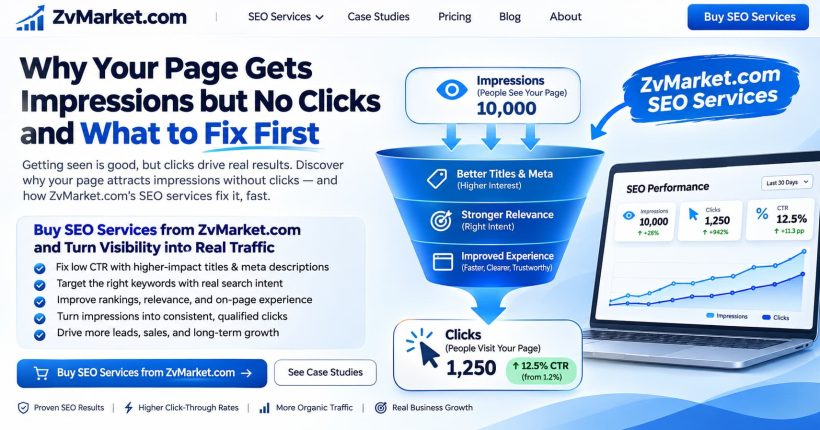
A page that gets Google impressions but no clicks may have a visibility problem, a relevance problem, or a reason...

-
Nov 27, 2026
You can find quick SEO wins in Google Search Console by looking for pages that already get impressions. A useful...
Sign up to receive our latest updates
Get in touch
Address
108 Imperial Ave, Winnipeg, MB R2M 0K7, Canada
Wolf@zvmarket.com
