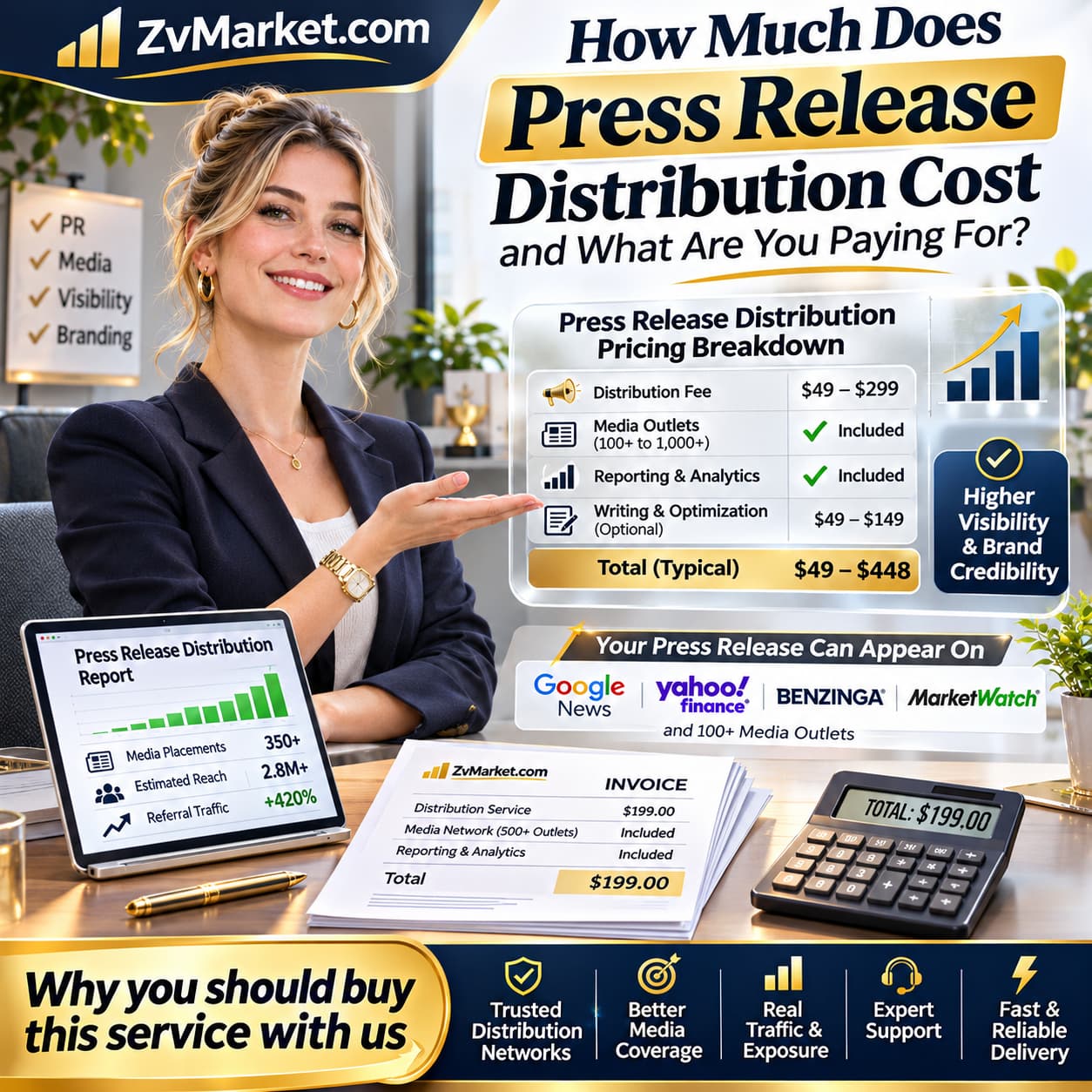
How Much Does Press Release Distribution Cost and What Are You Paying For?
-
November 27, 2026
Press release distribution cost depends on what the provider is doing with your announcement. A quote for distributing a release to one market may cover a different job from a quote that includes writing, several geographies, multimedia, and a report. Start by specifying the audiences and deliverables you need. Then compare written quotes for the same project, including the charges that can appear after an advertised starting price.
A launch aimed at nearby businesses may need less geographic reach than an announcement for several countries. A company with an approved release and usable photos may only need distribution. A smaller team may want help shaping the copy and coordinating submissions. Define what you already have before you ask a vendor for prices. A precise brief is the fastest way to learn what your campaign will actually cost.
Ask what the base fee buys
Find out whether the fee covers a distribution network, a specific geographic line, publication on the provider’s site, support for sending the release, or something else. Ask what markets, industries, and types of outlets are included. The size of a network does not tell you whether it overlaps with the people the announcement needs to reach. Get examples that match your campaign and ask how coverage or publication is distinguished in the report.
Review an actual pricing page such as Business Wire’s published pricing and distribution plans to see how a provider presents network scope and plan options. Treat the terms as that provider’s current offering. A different provider may calculate charges using separate tiers, word-count ranges, add-ons, or a quote. Confirm the pricing date, currency, and any charges or taxes that apply rather than relying on an older screenshot or comparison table.
Compare the factors that change the total
Geography can change the quote because local, national, and international distribution may use different networks. Industry targeting and translation can also change the scope. Ask about word count, image or video charges, and timing requirements. If the news must go out on a specific date, confirm whether rush handling or changes after submission carry a fee. A public starting price may not match those requirements.
Writing, editing, and account support may be separate. Find out whether the provider will write from a brief, simply review a draft, or submit the copy exactly as supplied. Ask how many revisions are included and who has final approval. If your team needs an image caption, language review, or a corrected version after publication, ask who manages it and how that affects the quote.
Work through an example with comparable inputs
Suppose you are announcing a new service to trade buyers in one country. You have a verified draft, one approved image, and a landing page. Create a brief with the audience, location, planned date, release length, image requirement, and reporting deadline. Ask two or three providers to quote that exact scope. Then ask them to itemize optional writing, additional markets, and any multimedia changes separately.
Set up a comparison table. Include base fee, geography, word allowance, image costs, writing, edits, reporting, and total. Add a separate column for uncertainties someone needs to resolve in writing. A less expensive quote may cover a smaller audience or provide fewer verified reports. A larger quote may include services your team already has. Compare the work you need before comparing the final amounts.
Know what you can and cannot conclude from placements
A distribution report may show that the release was available in a network or published on particular pages. An independently written article is a different outcome. Ask the provider what counts as a placement and whether the report includes live links, outlet information, or estimated reach. Keep estimated audience figures separate from observed visits or confirmed inquiries. A significant placement list can still have limited value if the people you wanted to reach rarely use those outlets.
Ask for a sample report. Check how corrections, duplicates, and broken links are handled. If a named outlet appears in a pitch, clarify whether that means possible distribution, a specific syndication arrangement, or independent coverage at an editor’s discretion. Establish a way to evaluate the work using AMEC’s planning framework for communications evaluation. Start with the business objective and decide which outputs and outcomes are worth measuring.
Decide whether the higher price solves a real problem
A wider network can help if it reaches credible audiences in markets you actually serve. Writing and coordination can make sense when the team cannot complete an approved release by the deadline. Multimedia can be worth the expense when a useful image or demonstration clarifies the news. A larger report may matter if you need to share evidence with partners. Avoid buying options just because they appear in a bundle.
Before paying, ask one colleague to read the brief and the quote together. They should be able to identify the audience, the materials you will provide, the work the vendor will do, and how you will assess it. Save the approved scope and expected report date. This gives you a reference if the launch timeline changes or the delivery looks different from what you expected.
Check renewal or commitment terms when a quote includes a package of several releases. Ask whether credits expire, whether you can shift them between markets, and whether a campaign can be paused if the announcement date moves. A bundle is easier to compare if you divide the cost by the number of releases you realistically expect to distribute. Treat unused credits as part of the possible cost and verify whether account support is available for one-off purchases as well.
When ZvMarket’s package is worth considering
If you need help coordinating the announcement and collecting placement information, explore ZvMarket’s press release distribution service. Buying a defined package can make it easier to plan around a single scope and deadline instead of managing each submission yourself. Share your approved topic, priority audience, and release assets first. Ask for the current price, included writing and revisions, final deliverables, and any limits before buying, then compare the package with quotes for the same work.
You May Also Like
-
Nov 27, 2026
Press release ROI begins with a definition of what the announcement was supposed to achieve. The campaign might aim for...

-
Nov 27, 2026
Press release headline examples are useful when you can adapt the underlying structure to real news. A strong headline gives...

-
Nov 27, 2026
To write a press release journalists can use quickly, give them accurate facts in an order that supports a quick...

-
Nov 27, 2026
Press release distribution vs media outreach is a planning decision for a product launch. Distribution gives multiple outlets access to...
Sign up to receive our latest updates
Get in touch
Address
108 Imperial Ave, Winnipeg, MB R2M 0K7, Canada
Wolf@zvmarket.com
