Press Release Distribution vs. Media Outreach for a Product Launch
-
November 27, 2026
Press release distribution vs media outreach is a planning decision for a product launch. Distribution gives multiple outlets access to a consistent announcement. Media outreach asks selected reporters or editors to consider a story tailored to their audience. Decide what you expect from each route before buying distribution or building a contact list. The right mix depends on the news, the people who would care about it, and what your team can prepare before launch.
Start by writing a one-sentence reason someone outside the company would care. A software startup might launch a feature that removes a common reporting problem for independent retailers. A furniture company might introduce a product that fits an unusually narrow space. Those are clearer starting points than “we are excited to announce our latest innovation.” Next, identify the people who need to know and where they already get relevant information.
Use distribution when a consistent announcement needs to be available
A distribution service can send a release through a published network or make it available for syndication. This is useful when brand partners, trade outlets, or other audiences need one accurate version of the news. Identify the markets, industries, languages, and formats that matter. Ask the service how the network works, how changes are handled, and what reporting can demonstrate after publication.
A syndicated copy and an independently reported story are different outputs. A syndicated page may carry the supplied wording. A journalist who covers the announcement independently may verify facts, interview someone, and decide what context to include. Label the two types in a report. Before paying, ask whether a named publication means a distribution target, a syndication partner, or an editorial outlet that may choose to cover the news.
Use outreach when a specific story has a specific audience
Read recent coverage from each reporter or editor you plan to approach. Look for a match between their audience, current topics, and the problem the product addresses. A trade reporter may want to see a practical change in a workflow. A local outlet may care about verifiable local employment or a community partnership. A product review publication may need access to a sample and time to assess it. Build the pitch around the need of that audience.
Keep the initial message brief. State what changed, why it matters to the reader, and which materials or people are available. Provide a link to a usable press page or asset folder, and make the sender easy to reach. Avoid adding recipients simply because their addresses are available. Business Wire’s guide to launching a PR campaign is a useful starting point for planning the goals and assets of a launch campaign before anyone sends a message.
Decide how to combine both routes around launch day
Write a schedule for approvals, interviews, product access, the press page, and official publication. If an embargo is appropriate, ask the reporter to agree before sharing anything under embargo. Do not assume a date in a subject line creates an agreement. Give editors enough time to get answers and check the facts. Coordinate the timing across partners so the announcement and the page it points to are accurate when people see them.
A combined campaign may use outreach before or around the release date and distribution when the announcement is public. Prepare separate materials for each. The release contains the facts in a stable format. The pitch explains why a particular outlet might support a story. A press page can offer photographs, product details, a quote, and contact information. Check links and rights so a recipient can use those materials without another request.
Match the approach to your resources and the strength of the news
If the launch matters to an existing customer base but has limited editorial appeal, a clear owned announcement and selected distribution may be adequate. If you have credible data, a useful demonstration, or a strong sector story and can speak to reporters, focused outreach can be worthwhile. You can do both when the team can support follow-up and the budget covers the right distribution scope. Avoid paying for broad reach before you know who should act.
For example, a new inventory tool could pitch a trade reporter with a demonstration of a workflow it improves. The public release could share availability and practical details for partners. The product page could explain who it serves and offer a supported next step. Give those pieces different jobs. People should be able to find the same facts without reading identical promotional language everywhere.
Define a useful result before the announcement goes out
Write down which outputs and outcomes you will report. Outputs can include verified syndication and independent articles. Outcomes can include relevant referral visits, requests for a demonstration, or conversations with partners. Record a baseline and use a consistent review window. AMEC’s communication evaluation framework explains how communication activity can be separated from the changes it is meant to support. A high placement count alone says little about whether the launch reached the intended audience.
At the review, list the places where a reader could find the announcement and identify what they could do next. Note which messages led to questions or useful visits. If the theme never caught the interest of a relevant audience, improve the angles and proof available for the next release. If editors were interested but could not access a usable asset, fix the press page and approval process.
Assign a single person to reconcile coverage and respond to corrections. A clear point of contact helps journalists and partners get the same answer when details change.
When paid distribution is worth buying
Consider ZvMarket’s press release distribution service once you have verified launch facts and a page readers can use. Buying support can save time when the team needs help preparing the release, coordinating submissions, and collecting live placement links. Share launch timing, audience, and assets, and ask what the package includes before purchasing. Evaluate the service against relevant reach and useful referral activity alongside any direct editorial outreach.
You May Also Like
-
Nov 27, 2026
Press release ROI begins with a definition of what the announcement was supposed to achieve. The campaign might aim for...
-
Nov 27, 2026
Press release headline examples are useful when you can adapt the underlying structure to real news. A strong headline gives...
-
Nov 27, 2026
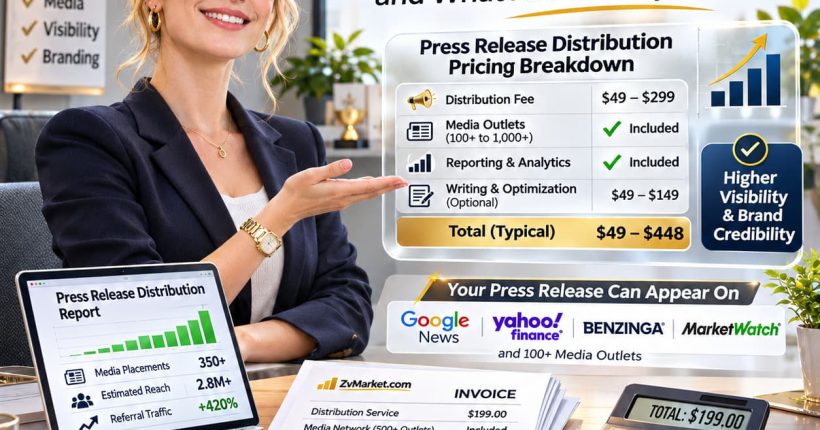
Press release distribution cost depends on what the provider is doing with your announcement. A quote for distributing a release...

-
Nov 27, 2026
To write a press release journalists can use quickly, give them accurate facts in an order that supports a quick...
Sign up to receive our latest updates
Get in touch
Address
108 Imperial Ave, Winnipeg, MB R2M 0K7, Canada
Wolf@zvmarket.com
